


Eyecare Business presents a primer on the first generation of myopia management innovations shaping treatment options in the United States, where approvals on myopia-specific solutions are happening slower than in other parts of the world.

The 3 technologies presented here represent the first of their kind approved by the US Food and Drug Administration (FDA)—a daily disposable soft contact lens from CooperVision, a spectacle lens from EssilorLuxottica, and an orthokeratology contact lens from Johnson & Johnson Vision.
MiSight 1 day
COOPERVISION
CooperVision MiSight 1 day is a daily disposable soft contact lens designed to both correct myopia and slow its progression in children. Indicated for children ages 8 to 12 at the initiation of treatment, the lens features CooperVision's proprietary ActivControl Technology, which incorporates concentric rings of alternating vision correction and treatment zones, according to the company. The vision-correction zones provide clear distance vision, and the treatment zones deliver +2.00 diopters of myopic defocus intended to slow axial elongation while allowing children to see clearly during everyday activities, CooperVision shares.
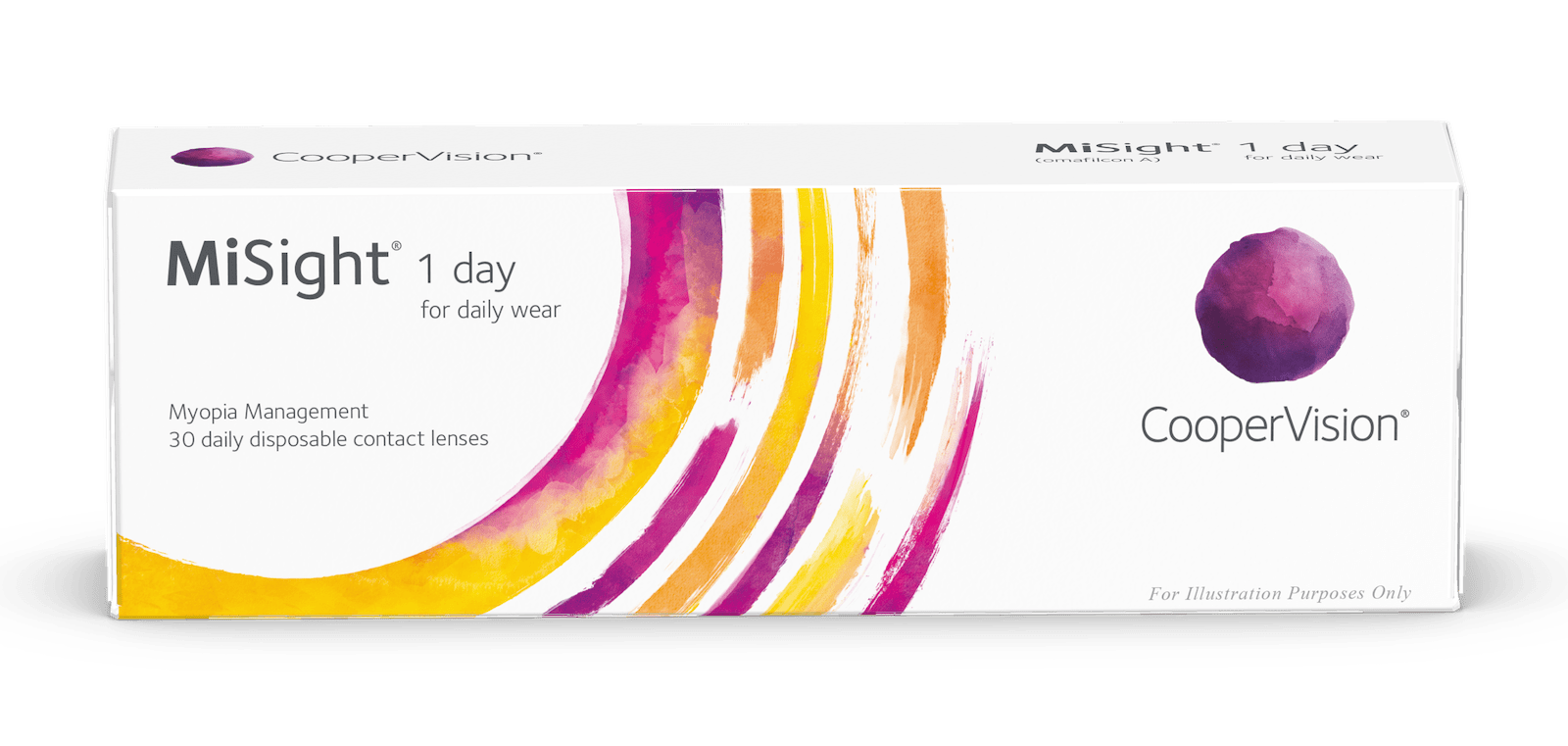
In 2019, MiSight 1 day became the first soft contact lens approved by the FDA to slow the progression of pediatric myopia. Clinical studies supporting the lens have demonstrated an average reduction of approximately 59% in myopia progression and 52% in axial elongation over 3 years compared with single-vision contact lenses.
Stellest
ESSILOR
Essilor Stellest is a spectacle lens designed for children with myopia that combines vision correction with myopia management.
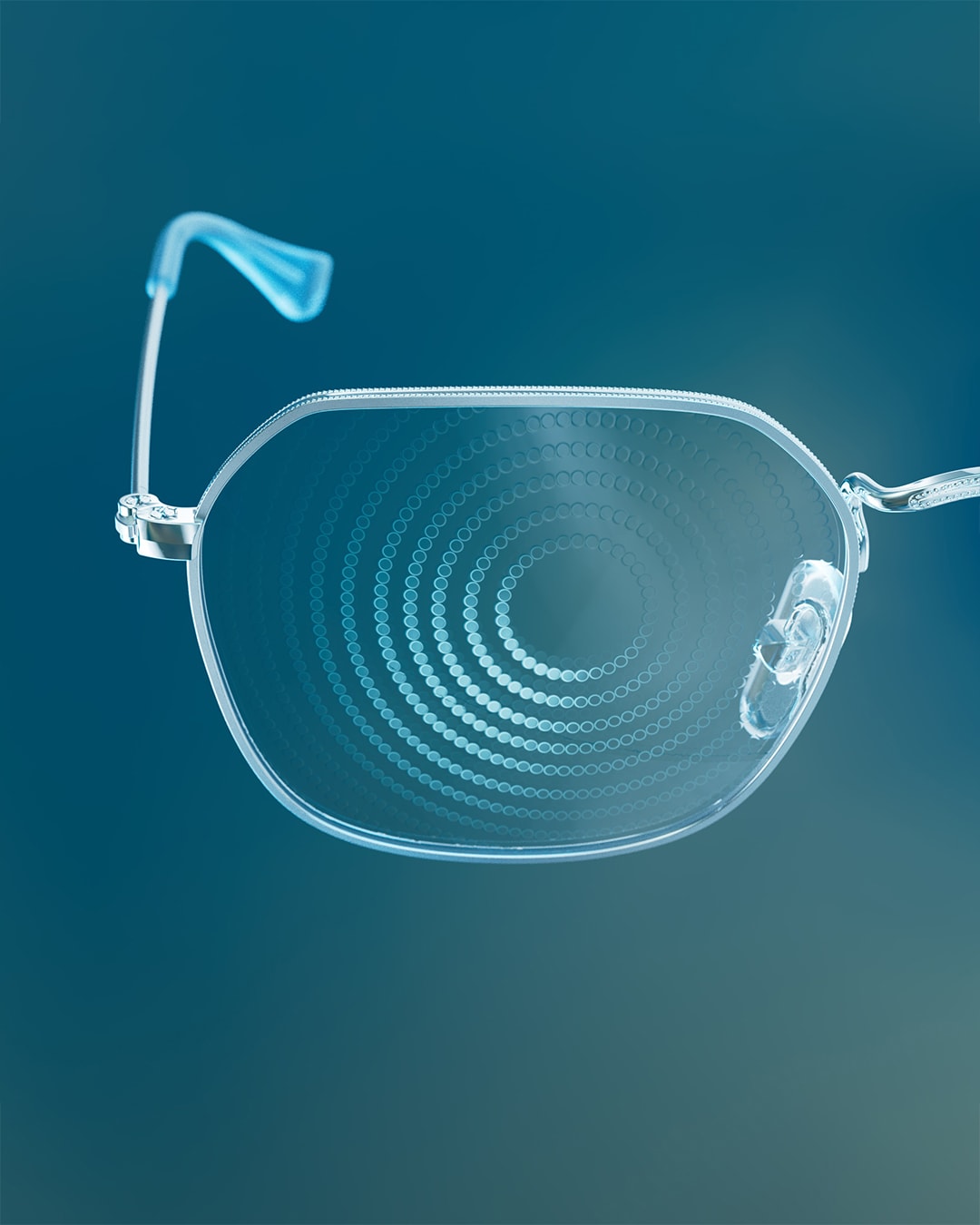
Essilor Stellest is a spectacle lens designed to both correct vision and slow the progression of myopia in children. Intended for children ages 6 to 12 at the initiation of treatment, the lens features Essilor's proprietary Highly Aspherical Lenslet Target (H.A.L.T.) technology, which incorporates 1,021 microscopic, highly aspherical lenslets arranged in 11 concentric rings surrounding a central vision correction zone, according to the company. While the central portion of the lens provides clear, everyday vision, the surrounding lenslets create a 3-dimensional volume of myopic defocus in front of the retina, a mechanism designed to help slow excessive eye growth (axial elongation), the primary driver of progressive myopia, Essilor shares.
In 2025, Essilor Stellest became the first spectacle lens authorized by the FDA to slow the progression of pediatric myopia.
“Myopia is more than a child needing stronger glasses year after year. It is a chronic, progressive condition that can impact long-term eye health. What makes Essilor Stellest lenses so meaningful is that they bring clinically validated myopia management into a form families already know: eyeglasses,” Monica Jong, OD, PhD, FAAO, head of medical affairs for North America at EssilorLuxottica, told EB. “In the 2-year clinical data evaluated by the FDA, Stellest lenses slowed myopia progression and eye elongation in children initially aged 6 to 12. It is easy for practitioners to prescribe, simple for patients to use, low risk, and works to both correct vision and slow the progression of myopia, especially for the younger children who need it most.”
Acuvue Abiliti Overnight
JOHNSON & JOHNSON VISION
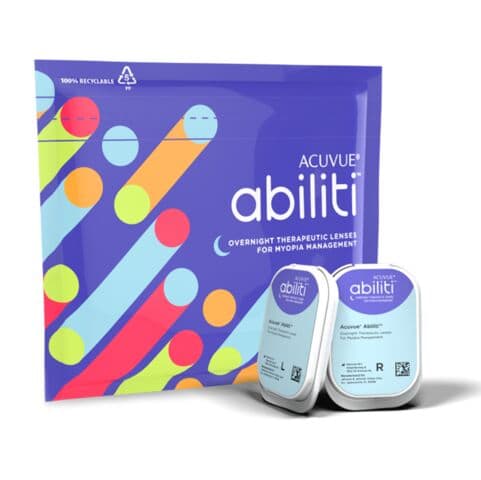
Acuvue Abiliti Overnight Therapeutic Lenses are FDA-approved orthokeratology contact lenses designed to both temporarily correct refractive error and manage myopia progression in children. Worn overnight, the custom-designed rigid gas permeable lenses gently reshape the cornea during sleep, allowing children to experience clear daytime vision without the need for glasses or contact lenses while awake, according to the company. Each lens is individually fitted based on detailed corneal topography and ocular measurements using Johnson & Johnson Vision's FitAbiliti software, which supports a personalized fitting process. The lenses are available in both spherical and toric designs, making them suitable for children with myopia as well as those with astigmatism. In the US, they are approved for reducing refractive error up to 6.00 D of myopia and up to 1.50 D of astigmatism while providing myopia management.
Clinical studies supporting the 2021 FDA approval demonstrated that Acuvue Abiliti Overnight lenses reduced axial elongation in myopic children by an average of 0.28 mm over 2 years compared with single-vision spectacle lenses, helping address the underlying eye growth associated with progressive myopia. The lenses were the first orthokeratology lenses approved by the FDA for myopia management.
Notable products that are not currently available to eyecare professionals and their patients in the United States:
-
Hoya’s flagship myopia management solution, MiyoSmart is a spectacle lens that builds on Hoya’s Defocus Incorporated Multiple Segments (D.I.M.S.) Technology with an enhanced optical design intended to deliver myopic defocus while maintaining clear central vision, according to the company. The lens is designed to slow myopia progression and axial elongation in children, including those with early-onset myopia. According to Hoya, 12-month clinical trial results showed that 9 out of 10 children experienced no clinically relevant myopia progression, with efficacy demonstrated in children as young as 4 years old.
-
Zeiss MyoCare is a spectacle lens portfolio designed to slow myopia progression in children while providing clear, comfortable vision throughout the day. The lenses incorporate the company's proprietary C.A.R.E. (Cylindrical Annular Refractive Elements) Technology and ClearFocus design to create myopic defocus while maintaining vision across different gaze angles, according to the company. The portfolio includes MyoCare and MyoCare S, offering 2 lens designs to support children with varying adaptation needs. Zeiss shares that clinical studies have shown the lenses can significantly reduce myopia progression and axial elongation compared with single-vision lenses, with most children adapting to the lenses within days.