


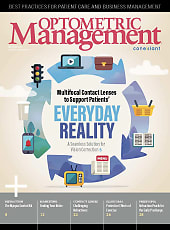
Clinical Scorecard: Not Your Parents’ Presbyopia
At a Glance
| Category | Detail |
|---|---|
| Condition | Presbyopia |
| Key Mechanisms | Increased screen time leading to near-vision challenges. |
| Target Population | Patients in their late 30s and early 40s experiencing early presbyopia. |
| Care Setting | Eye care practices. |
Key Highlights
- Presbyopia is increasingly affecting younger patients due to digital device usage.
- ECPs should adopt a proactive communication strategy focused on lifestyle changes.
- The contact lens continuum helps patients transition from single-vision to multifocal lenses.
- Education and hands-on trials can demystify multifocal lenses for patients.
- Tailoring lens prescriptions to individual lifestyles enhances patient satisfaction.
Guideline-Based Recommendations
Diagnosis
- Assess symptoms of digital eye strain during routine exams.
Management
- Encourage patients to adopt better habits regarding screen time and eye usage.
Monitoring & Follow-up
- Regularly evaluate patients' visual needs and adapt prescriptions accordingly.
Risks
- Misconceptions about multifocal lenses may hinder patient acceptance.
Patient & Prescribing Data
Younger presbyopes with high screen time.
Multifocal lenses can be used part-time based on lifestyle needs.
Clinical Best Practices
- Initiate conversations about presbyopia before symptoms arise.
- Use visual aids and demonstrations to explain multifocal optics.
- Customize lens solutions based on patients' daily activities.
References
This content is an AI-generated, fully rewritten summary based on a published scholarly article. It does not reproduce the original text and is not a substitute for the original publication. Readers are encouraged to consult the source for full context, data, and methodology.